
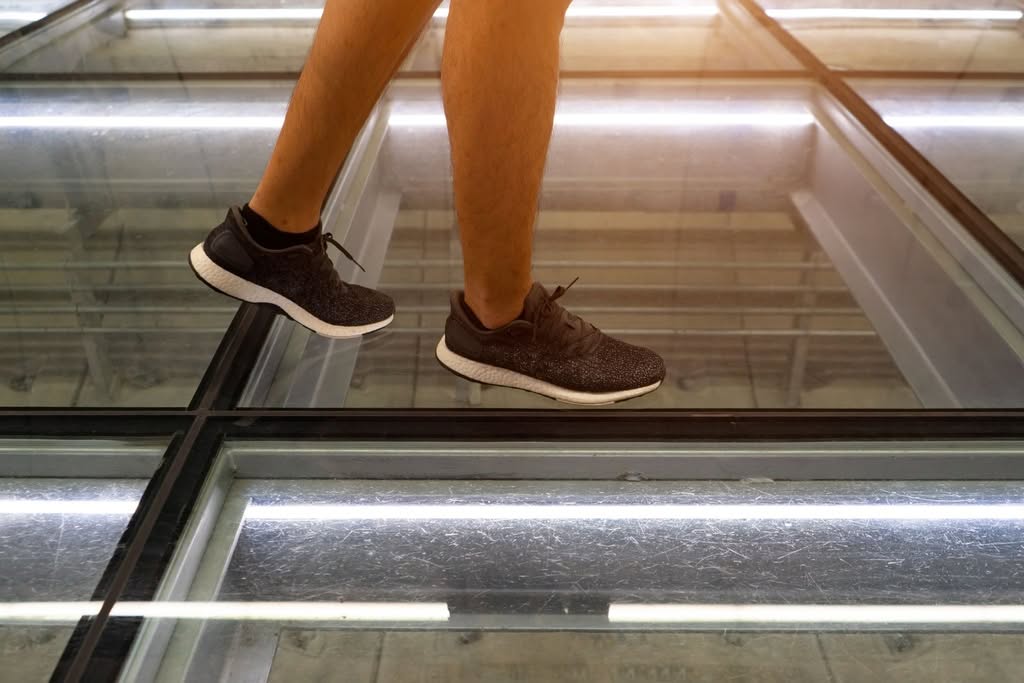
Walkable glass is usually a specially engineered glass system made for structural use, not standard window or door glass. In most applications, that means laminated safety glass, often combined with tempered layers, proper support framing, and a slip-resistant surface, so the finished installation safely withstands weight, impact, and everyday use.
What to know before using glass as a walking surface
In the right application, glass can do more than divide a room or frame a view by becoming part of the floor itself and helping the space feel lighter and more open. Though not every type of glass is built for that level of performance.
To understand which glass people can walk on safely, consider its strength, layering, support, and intended use. Understanding the difference between standard glass and engineered walkable glass helps homeowners, builders, and designers make better decisions before planning glass flooring or custom glass floor panels.
What glass can people safely walk on?
Manufacturers make some glass for walk-on use, but they do not make most glass for that purpose. In most cases, walk-on applications require an engineered system built for strength, safety, and long-term performance.
The most common types of glass used in these applications include tempered, laminated, and structural glass. Laminated glass is especially important because it helps hold the assembly together if one layer breaks.
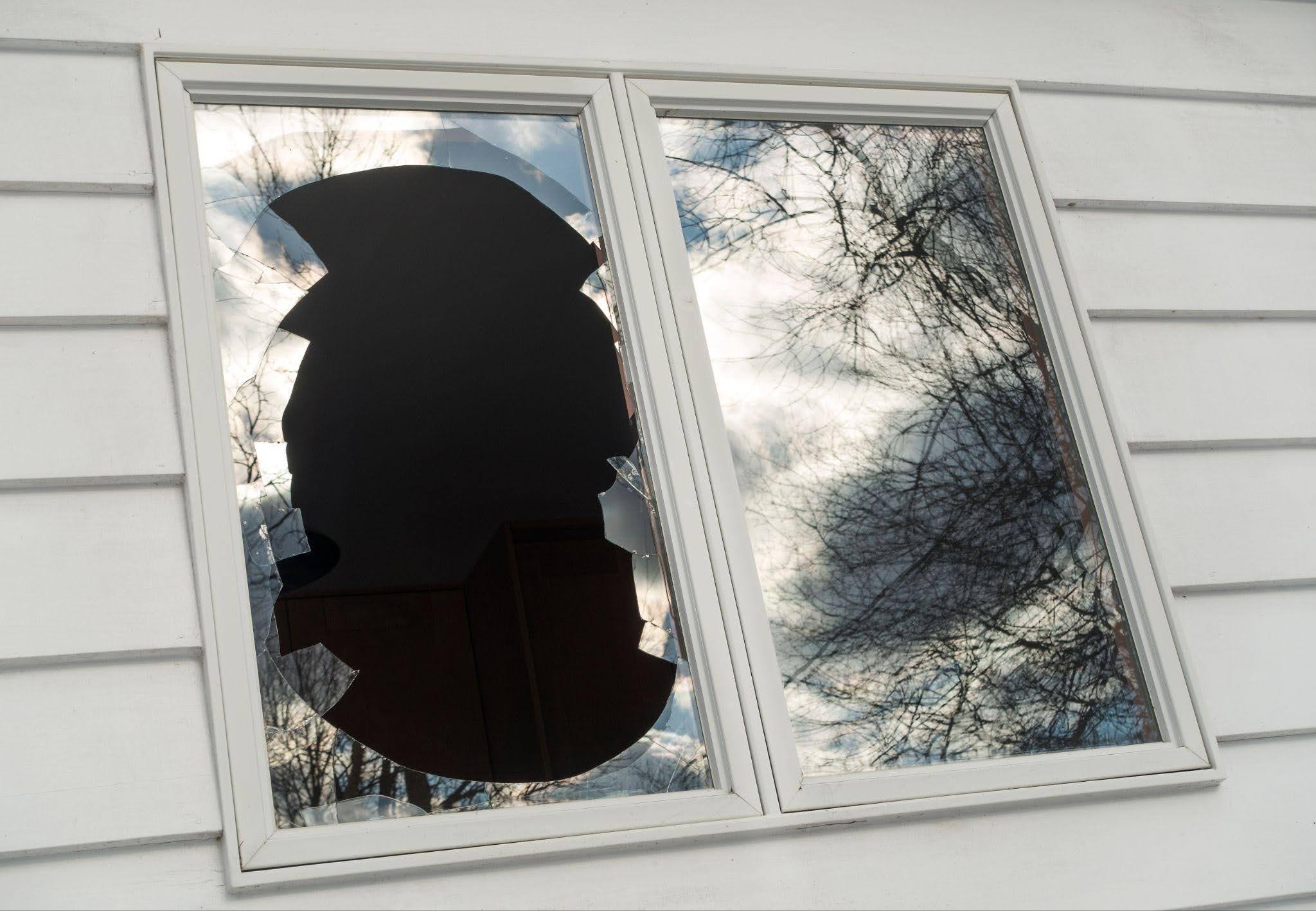
Standard annealed glass isn’t suitable for walk-on use, and heat-strengthened or wired glass shouldn’t replace a purpose-built floor system.
How to evaluate a walk-on glass application
1. Start with the application
First, define where the glass will go. A stair landing, bridge element, balcony section, or interior feature floor may require a different build-up depending on span, traffic, and visual goals.
2. Review load and support requirements
A walk-on installation is part of a structural system. Glass floors and stairs depend on proper support framing and load-bearing design, not on strong glass alone.
3. Choose the right glass assembly
The design team should determine whether the application needs laminated construction, tempered lites, and other structural details. This is where glass floor panels stop being a decorative idea and start becoming a technical product.
4. Think about slip resistance
Walking surfaces need slip-resistant finishes, especially in areas exposed to moisture, dust, or frequent foot traffic.
5. Plan for maintenance and visibility
Scratches, footprints, dust, and smudges show up quickly on glass. Plan for maintenance from the very beginning.
6. Confirm everything with a qualified glass professional
Final detailing, edge conditions, support framing, and installation quality all affect long-term performance.
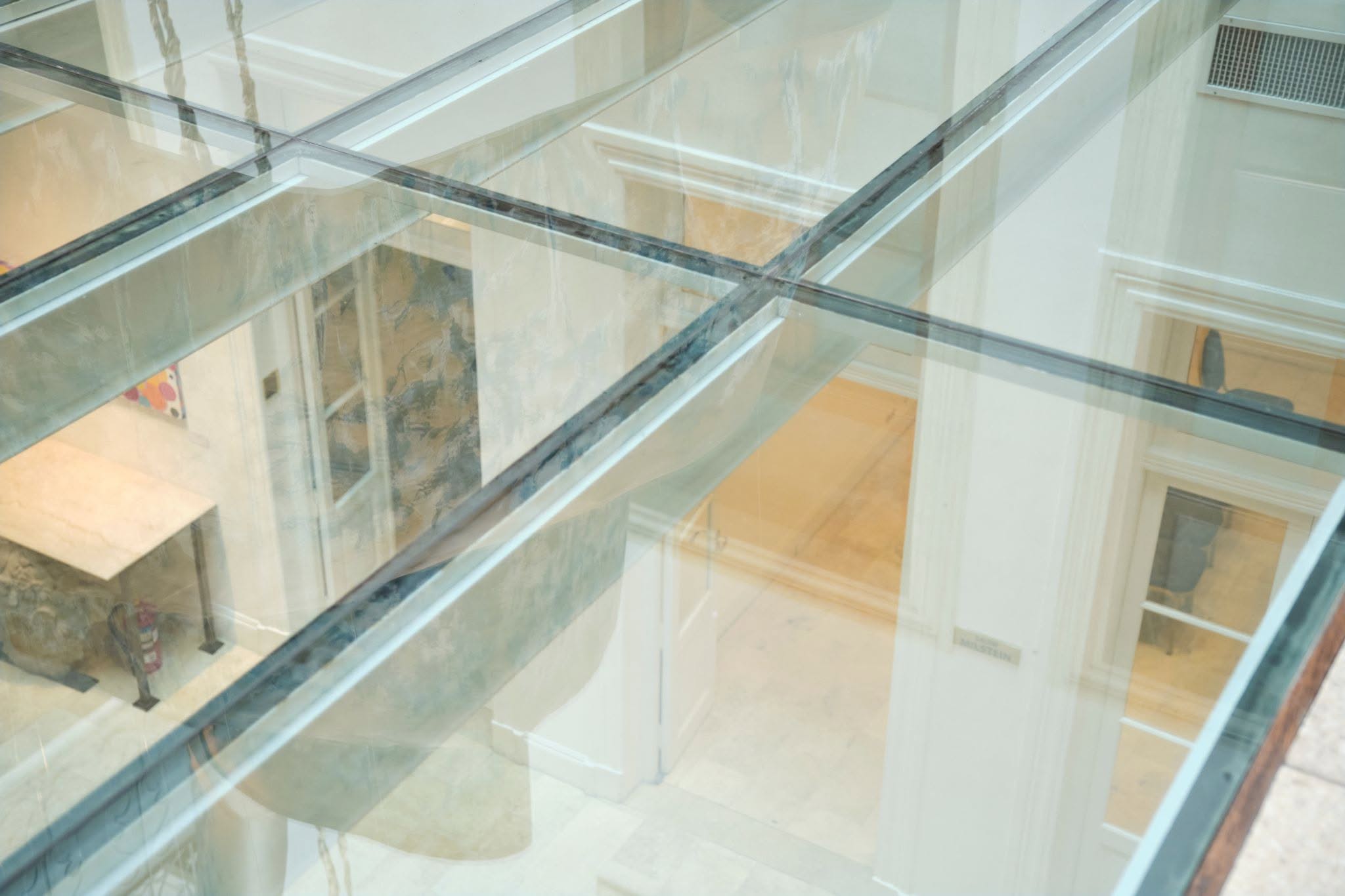
Where designers and builders commonly use this type of glass
Designers and builders often use walk-on glass to keep a surface usable while still allowing light to pass through the space. That might include a bridge or landing between levels, an interior feature floor above a lower room, or a commercial design element that needs structure and visual impact.
In residential projects, designers often use walkable glass in custom features that make a home feel brighter and more open. In commercial settings, designers often use it to create a strong focal point or maintain sightlines while still letting light move through the building. Either way, the design team needs to prioritize structure first and appearance second.
The same goes for glass flooring in modern design. It looks clean and minimal, but the best projects pair that visual effect with realistic planning. Well-designed glass floor panels add something unique to a space, but they also need to feel stable, safe, and easy to maintain once people actually use them.
Why walk-on glass takes the right design approach
When engineered correctly, walk-on glass offers real design value.
Benefits of this type of installation:
- Brings light deeper into the space
- Helps interiors feel more open
- Creates a distinctive architectural feature
- Supports modern, minimal design goals
- Makes a custom project feel more intentional
Why the right material matters:
- Engineers need to design walkable glass for structural use
- Glass flooring should perform safely and look impressive
- The wrong product choice creates durability and safety problems
- The right assembly helps balance light, structure, and appearance
Mistakes to avoid with walk-on glass
- Assuming any thick glass will work: Thickness alone doesn’t make glass suitable for walking on.
- Treating tempered glass as the full answer: In many cases, tempered glass is only one part of a larger laminated system.
- Ignoring support structure: Even a high-quality glazing product can fail if the design team does not handle the framing and span correctly.
- Overlooking slip resistance: A walk-on surface has to perform under real foot traffic.
- Choosing appearance over performance: Choose glass floor panels based on structural fit, finish, and maintenance needs.
Standards and safety guidance for walk-on glass
- ASTM’s laminated architectural flat glass specification covers glass made from two or more lites bonded with an interlayer for building applications.
- The National Glass Association’s guidance on glass floors and stairs describes walk-on surfaces as tempered, laminated glass systems supported by engineered framing.
- ASTM also has a design and performance practice specifically for supported laminated glass walkways, treads, and landings, which underscores the specialized nature of these systems.
- Slip resistance still matters in walk-on glass applications, because safe walking surfaces need to account for real foot traffic.
Planning and material considerations
- Laminated construction is often a key part of walk-on glass because it helps the assembly stay together more effectively if damage occurs.
- Tempered layers may also be part of the build, depending on the design and load requirements.
- Support conditions, interlayers, thickness, finish, and maintenance all affect how glass floor panels perform.
- Treat glass flooring as a specialty design element and plan for it carefully from the start.
- If you are considering a custom feature with structural or walk-on use, start by talking through the application.
FAQ
Is tempered glass enough to walk on by itself?
Usually, no. Tempered glass may be part of a walk-on system. Still, many real applications rely on laminated assemblies with engineered support framing so the installation can handle load and maintain better post-breakage performance.
Can laminated glass be used in walk-on applications?
Yes, laminated glass is commonly used in walk-on systems because the interlayer helps keep the assembly together if one lite breaks. That is one reason it is a common part of structural glass floor and stair designs.
What glass should people avoid walking on?
Do not use standard annealed glass as a walking surface, and do not use non-structural glazing products as floor systems unless engineers designed them for that purpose.
Are glass floors safe?
They are when properly designed, specified, and installed. Safety depends on the full system, including the glass assembly, support framing, slip resistance, and the expected load on the surface.
Where is walk-on glass most commonly used?
Designers and builders most often use it in floors, stairs, landings, bridges, and other specialty residential or commercial features that require structural support and light transmission.

Talk to Murray Glass about walk-on glass applications
Engineers design walk-on glass as a purpose-built system around structure, safety, and how people will actually use the finished surface. If you are considering a custom glass feature for a home or business, Murray Glass can help you think through the application, understand the options, and choose the right glass for the project.
If you want to explore what is possible for your space, contact Murray Glass to start the conversation. Our team helps you talk through the design, functionality, and practical details before moving forward.