
What to consider when choosing shower-door glass
Clear or frosted glass may be the first choice that comes to mind, but the enclosure itself plays a bigger role. The glass also needs to suit the opening, hardware, and overall shower design. The finish also affects privacy, light, visibility, and maintenance, which is why the best glass for shower doors varies by bathroom. This guide compares the main options, so you can choose a custom shower glass that fits the space and works well for everyday use.
What type of glass works best for a shower door?
For most homes, clear tempered glass offers the strongest balance of safety, cost, appearance, and versatility. It keeps the bathroom feeling open, lets tile remain visible, and suits many framed and frameless designs.
Low-iron tempered glass works well when visual clarity takes priority. It reduces the green tint found in standard clear glass, especially along thicker edges. Frosted and textured tempered glass is better suited to homeowners who want more privacy.
A simple way to compare the best glass for shower doors is by priority:
- Best overall: Clear tempered glass
- Best clarity: Low-iron tempered glass
- Best privacy: Frosted tempered glass
- Best decorative privacy: Rain, fluted, or patterned glass
- Best fit for many frameless enclosures: 3/8-inch tempered glass
Tempered vs. laminated shower glass
Tempered and laminated describe how glass performs when damaged. Clear, frosted, low-iron, and textured describe its appearance.
Tempered glass
Manufacturers heat-treat tempered glass to increase its strength. If it breaks, it crumbles into small pieces instead of forming large, sharp shards. That break pattern makes it the standard choice for most residential shower doors.
A glass shop must finish all cutting, drilling, notching, and edge work before tempering. Once tempered, the glass can’t be trimmed or drilled.
Laminated glass
Laminated glass contains an interlayer that helps hold broken pieces together. It may suit specialized enclosures or projects with particular safety requirements, but it usually costs more and may require different hardware.
For most homes, tempered glass remains the practical choice. A clear, frosted, textured, or low-iron glass shower door all use tempered safety glass.
Clear, low-iron, frosted, and textured glass
Clear glass
Clear glass keeps the room feeling open and allows tile, stone, and fixtures to remain visible. It works with most bathroom styles and usually costs less than specialty finishes. However, it shows water spots and mineral deposits sooner.
Low-iron glass
Standard clear glass contains iron, which creates a slight green tint. Low-iron glass reduces that tint and shows colors more accurately. It works especially well with white tile, pale stone, marble, and frameless enclosures with exposed edges.
Homeowners who want the cleanest visual appearance often consider low-iron glass the best glass for shower doors with light-colored finishes.
Frosted glass
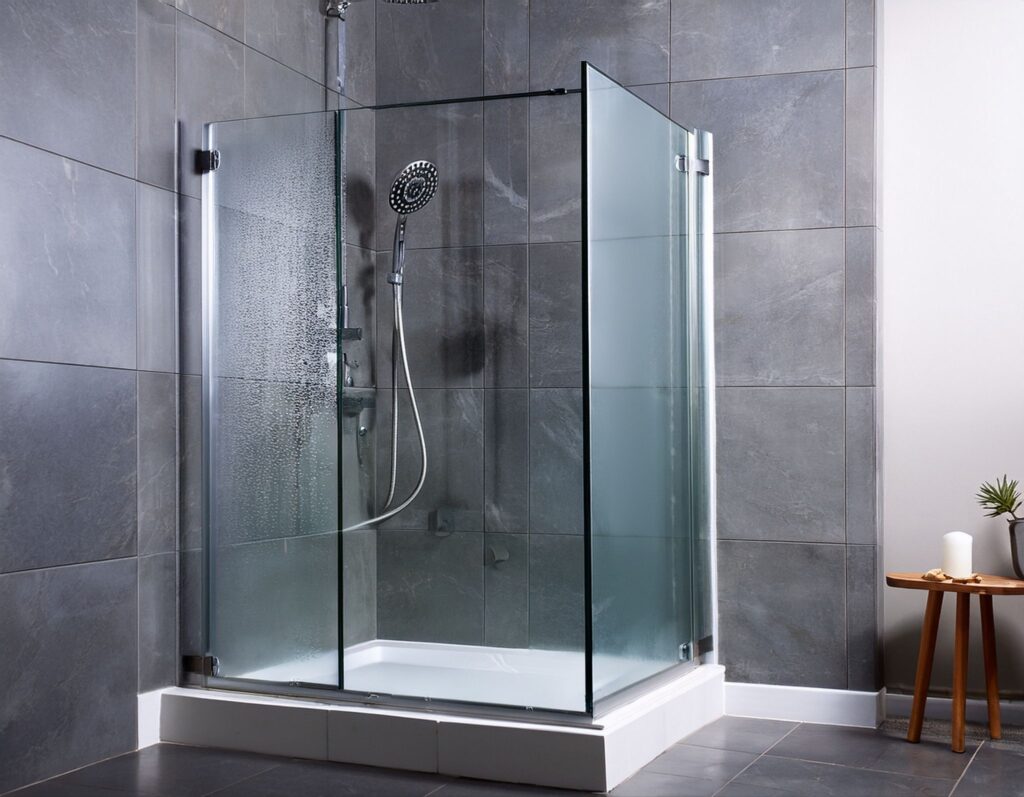
Frosted glass diffuses light and limits visibility into the shower. It works well in shared bathrooms or showers near a doorway or window, though it may make the room feel less open.
Rain, fluted, and patterned glass
Textured glass adds privacy and visual detail. These finishes distort the view rather than fully blocking it. Deep grooves collect soap residue. Many products place the smoother side toward the shower for easier cleaning.
What glass thickness does a shower door need?
Glass thickness depends on the enclosure, panel size, hardware, and wall support. Thicker glass isn’t automatically better.
1/4-inch glass
Framed shower doors often use 1/4-inch tempered glass. The metal frame supports the edges and keeps the panels rigid. It is lighter and often less expensive.
3/8-inch glass
Many frameless enclosures use 3/8-inch tempered glass. It provides a practical balance of rigidity, weight, and cost. This thickness works well for many swinging doors and fixed panels.
1/2-inch glass
Large panels or certain frameless layouts may use 1/2-inch glass. It offers more rigidity but adds weight to the hinges, clamps, walls, and curb. The hardware and wall structure must support it.
A professional measurement determines whether thicker custom shower glass improves the enclosure or only adds weight and cost.
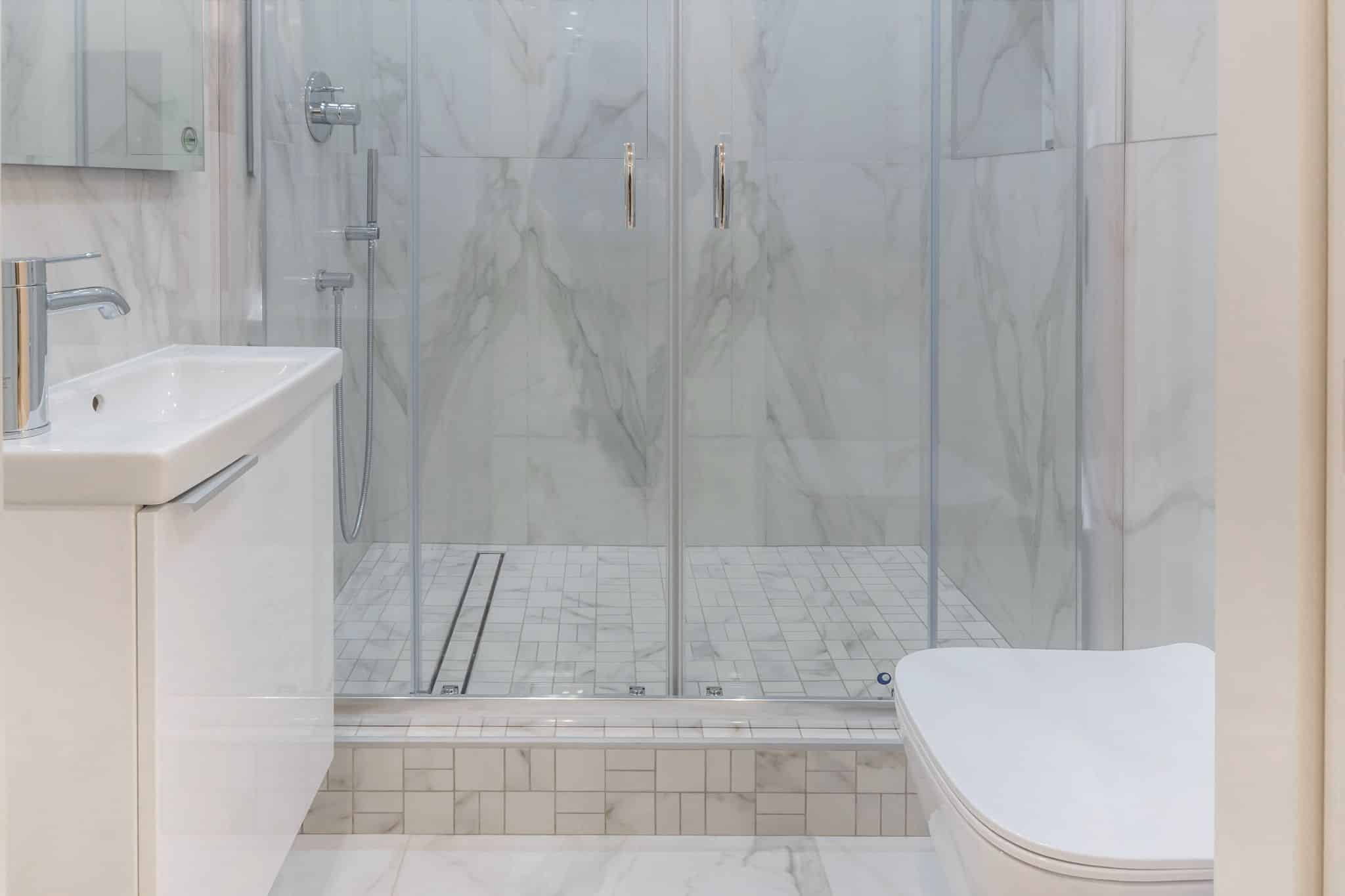
Does framed or frameless construction change the glass choice?
Framed shower doors
A framed enclosure surrounds the panels with metal, so it often uses thinner tempered glass. Several finishes work, but the original channel dimensions may limit replacement thickness.
Semi-frameless shower doors
Semi-frameless systems support some edges while leaving others exposed. They may use 1/4-inch or 3/8-inch glass.
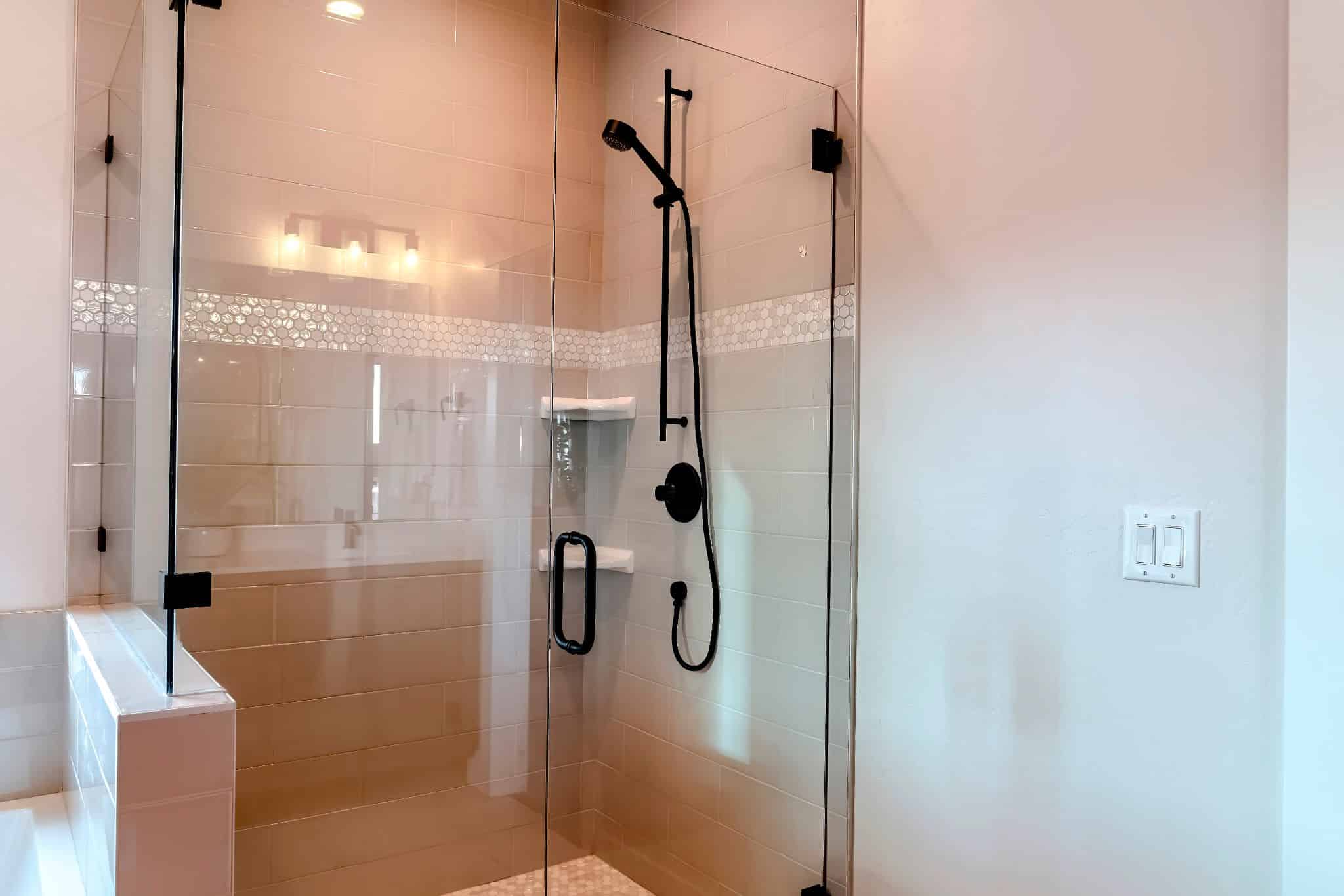
Frameless shower doors
A frameless enclosure relies more heavily on the glass and hardware. These systems commonly use 3/8-inch or 1/2-inch tempered glass. Hinges and clamps need to be securely anchored behind the tile.
Door width, wall alignment, swing clearance, and curb conditions affect the design. Sliding doors also need glass that matches the roller and track capacity. The best glass for shower doors in a frameless system is the thickness that works with the opening and hardware without adding unnecessary weight.
What shower glass is best for privacy and cleaning?
Privacy varies by finish:
- Clear and low-iron glass: Low privacy
- Lightly textured glass: Moderate privacy
- Rain, fluted, or reeded glass: Moderate privacy
- Frosted glass: High privacy
Patterned glass may distort shapes without fully concealing them. Frosted glass provides stronger privacy.
For cleaning, smooth, clear, and low-iron glass is usually the easiest surface to wipe and squeegee. Their flat surfaces collect less residue, but they show spots sooner.
Frosted and textured glass may conceal water spots from a distance, but deep patterns trap residue. Protective coatings may reduce mineral and soap buildup, though they don’t make a glass shower door maintenance-free.
Utah’s hard water leaves mineral deposits. A squeegee and regular cleaning reduce buildup. When choosing the best glass for shower doors, consider both the appearance you want and the cleaning routine you’ll realistically follow.
The right care routine also helps a new glass shower door stay clearer and reduces the amount of heavy cleaning it needs over time.
What affects the cost of shower-door glass?
The price of custom shower glass depends on several details:
- Glass thickness
- Standard clear or low-iron glass
- Frosted or patterned finishes
- Protective coatings
- Door and panel dimensions
- Holes, notches, and edge work
- Hinges, handles, tracks, and clamps
- Removal of an old enclosure
- Wall, tile, and curb conditions
Thicker panels often require heavier hardware and stronger anchoring. A clear written estimate for custom shower glass shows how each choice affects the project before fabrication starts.
Common mistakes when choosing shower glass
Avoid these common mistakes:
- Choosing thickness based only on appearance
- Assuming thicker glass always works better
- Confusing low-iron glass with tempered safety glass
- Ignoring support behind the tile
- Selecting deep texture without considering cleaning
- Assuming patterned glass provides complete privacy
- Reusing hardware that doesn’t support the new panel
- Measuring without checking whether the walls are plumb
- Assuming tempered glass will be cut later
Professional measurement lets us match the glass and hardware to the opening before fabrication begins.
Frequently asked questions
Is 3/8-inch or 1/2-inch shower glass better?
Neither works best for every enclosure. Many frameless doors use 3/8-inch glass because it offers good rigidity without excessive weight. Larger panels or specific designs may use 1/2-inch glass, but the hardware and walls need to support it.
Is low-iron shower glass worth the extra cost?
Low-iron glass provides the clearest benefit with white tile, marble, pale stone, and thicker frameless panels. Standard clear glass may offer better value when a slight green tint doesn’t affect the overall look.
Can shower glass be cut after tempering?
No. A glass shop must complete all cutting, drilling, shaping, and edge finishing before tempering. Attempting to cut tempered glass will cause it to break.
Can I replace only the glass in my shower door?
Sometimes. The frame, hardware, opening dimensions, tile condition, and glass thickness determine whether a glass-only replacement will work.
Does frosted shower glass show water spots?
Frosted glass may make spots less visible, but mineral deposits and soap residue still build up. Smooth frosted finishes usually clean more easily than deeply textured surfaces.
Can I reuse my existing shower-door hardware?
Possibly. The hardware must remain in good condition and match the new panel’s thickness, weight, dimensions, and hole placement.
Choose the right shower glass with Murray Glass
Tempered glass works well for most residential shower doors. Clear glass offers strong value, low-iron glass improves clarity, and frosted or textured glass adds privacy. The right option also depends on the frame, hardware, wall support, and cleaning preferences.
Murray Glass measures the opening, explains the options, and helps you choose glass that fits the enclosure. Contact Murray Glass today to discuss your project and request a free estimate.